







Aerial_Knight's Never Yield review
May 25, 2022 by RSS Feed
It can be tough to make a runner that stands out these days, but that is the least of Aerial_Knight's Never Yield's concerns. With a distinct visual style and energetic original soundtrack, this game constantly works to grab your attention, but it only manages to do so in fits and starts. So many of this independently developed project's many pieces just don't quite gel the way you expect them to, making it hard to fully appreciate all of its cool ideas.
Detroit dystopia
Aerial_Knight's Never Yield has you play as Wally, a man on the run from a facility where he was seemingly cloned. This kicks off what is essentially an extended chase sequence that takes you into the heart of a futuristic version of Detroit, complete with drone armies, robot legs, and a genetically modifed arch rival who can shoot swords via telekinesis.
As Wally runs along, there are all kinds of things that get in his way, but you can tap on the screen in different places to have Wally sprint, jump, vault, or slide to avoid injury and keep moving forward. The further you get into the city, you learn slightly more about Wally, though only through wordless cutscenes that don't truly spell anything out.
Awkward acrobatics
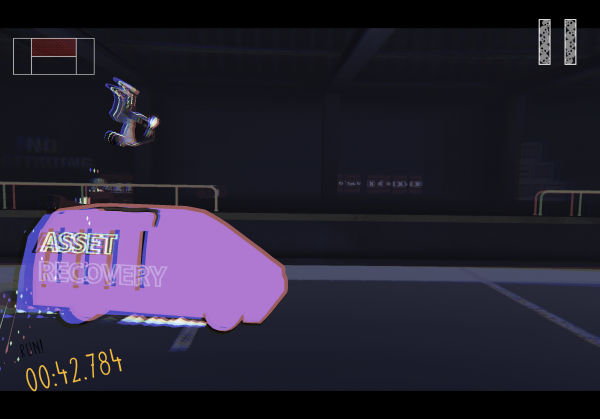
The most standout quality of Aerial_Knight's Never Yield is definitely its audio/visual style. With a low-poly--almost cel-shaded--look and a soundtrack of propulsive beats, the game evokes iconic experiences like Jet Grind Radio while never feeling like it's cribbing material from them.
Unfortuntely, Never Yield almost never quite feels as good to play as it looks. This starts with the game's controls, which awkwardly (and invisibly) divide your device screen into four buttons (though you can opt to play via swipes). Neither of these schemes feels quite right, though, particularly because Never Yield also has a slow motion mechanic designed to help you read and react to obstacles more easily but sometimes activates so early ahead of a hazard that you end up vaulting right into a low table or slide just ahead of a tunnel instead of smoothy traversing them as expected.
Concocted cohesion
Never Yield isn't a terribly long game, but that's honestly probably a good thing. By the time you're about halfway through it, obstacles start looking more than familiar. Once you dial in how to time maneuvers around the slow motion windows, you can easily sail through levels without having to retry at all.
It's in this state of familiarity and flow that Aerial_Knight's Never Yield's starts to shine. Stringing together long combos of parkour while buildings explode around you and a jazzy hip-hop beat plays in the background can be pretty satisfying. That said, it's just not that easy to find this state of being in the game, primarily because of the controls. If you hit an obstacle and have to restart, Never Yield does quickly pop you back to a checkpoint, but as those get further and further apart between tons of obstacles, dying because you reacted to a cue that was too early gets more and more frustrating.
The bottom line
I wish more of Aerial_Knight's Never Yield came together to feel a little tighter and well composed. Almost everything going on in it is fine, good, and even cool on paper, but they just don't seem fully realized and stitched together seamlessly here. As a result, Aerial_Knight's Never Yield is certainly a memorable experience, but not necessarily one I can fully recommend.
Source link:https://www.148apps.com/reviews/aerialknights-never-yield-review/
credit : 148apps

M.Duck review
May 25, 2022 by RSS Feed
[youtubekgCYqYSRCy4 600]
The pitch for M.Duck is tantalizingly succinct. Billed as a roguelite about a duck that knows magic, this game has a surprisingly firm sense of what it is and what it offers, and it does a great job of backing up its claims with creative design wrapped around its small, endearing scope.
Duck dungeon
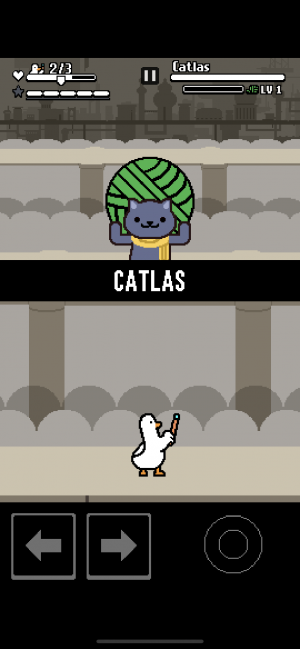
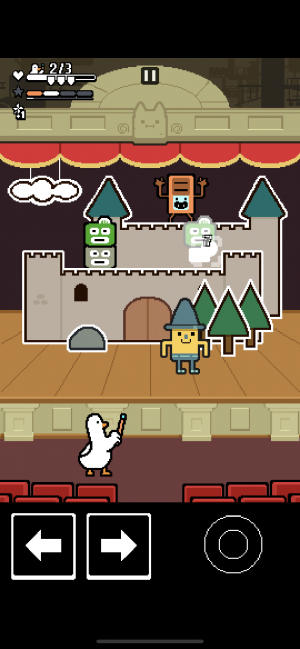
M.Duck is a dungeon-crawler where the protagonist is a duck with a magic wand. You control the duck using virtual buttons to move it left or right across the bottom of the screen and fire off magic bullets at enemies that appear in what is basically a shooting gallery arena.
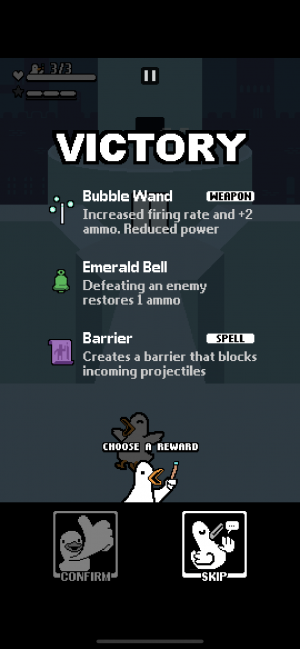
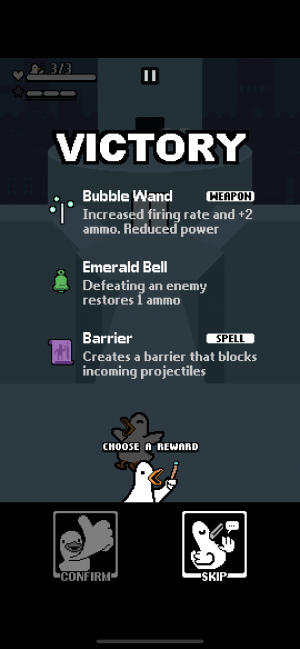
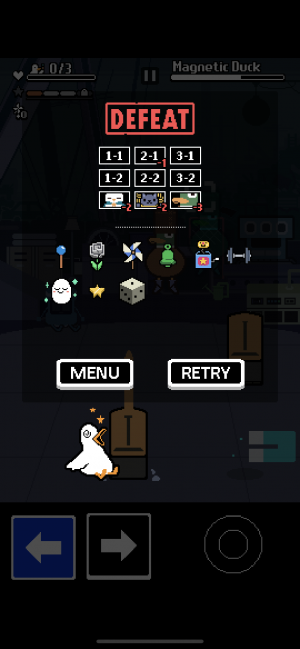
The goal is simply to defeat every enemy in each wave without dying. If you do, you may be granted a selection of upgrades to your abilities that will help you with the tougher enemies ahead. If you don't, you can try again from the beginning of the game.
Smart simplicity
If this all sounds really straightforward and simple, it's kind of because it is. M.Duck really only complicates itself in one way: The controls are intentionally designed to make it so you cannot shoot your wand and move at the same time. The ramifications of this one change are pretty massive, though, as nearly all of M.Duck's enemy designs and challenge hinge on this single design choice.
The upgrades you earn as you progress through a run can certainly help you compensate for this limitation. For example, there are unlocks that let you move faster or fire more shots, but none of them sidestep the core restraint, and every level in the game is primarily concerned with forcing you to juggle and choose between dodging and attacking at all times.
Charming canard
M.Duck smartly presents a ton of different upgrade options, enemy types, and even randomized bosses to ensure that playing and replaying the game doesn't grow old too quickly. It also has a couple of different difficulty options and a boatload of achievements for you to unlock so you have a good chunk of goals to work toward, even after you've already completed the game.
That said, the game can get a little deflating if and when deep runs get cut short. Luckily, M. Duck isn't a terribly long game, and its skill ceiling is such that you don't need to rely on specific powers to do well. If you stick with it and its colorful dungeons long enough, challenges that once seemed incredibly hard start to feel more achieveable.
The bottom line
M.Duck's confidence and charm makes for a pretty compelling package. It has a great sense of challenge that doesn't overcomplicate things, while also never feeling like it's something that got watered down to feel manageable on a phone. It's just a really great dungeon-crawler that doesn't take itself too seriously.
Source link:https://www.148apps.com/reviews/m-duck-review/
credit : 148apps
Sumire review
May 25, 2022 by RSS Feed
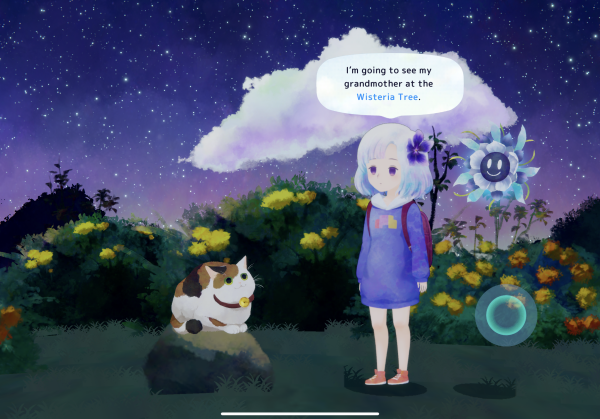
It's easy to look at Sumire and be cynical about it. Everything about it is contrived to build up to an emotional climax that you can see from miles away. Any yet, it's hard not to feel touched by the game's story and its simple message, thanks in no small part to the gorgeous presentation that brings this small world to life.
A day in the life
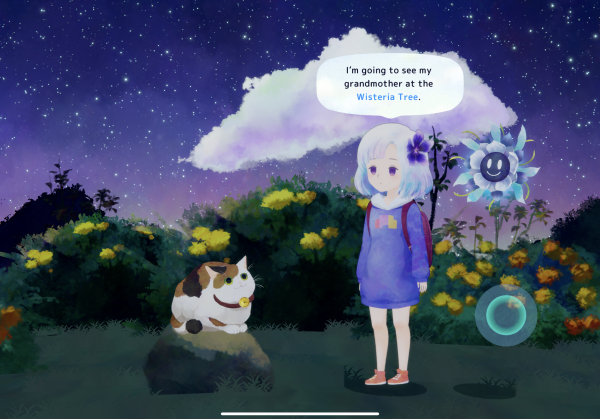
Sumire starts with the titular character waking from a dream about their late grandmother, who she clearly misses and regrets not doing or talking more with. This leads into an eventful day ushered in by a mysterious and magical talking flower that Sumire stumbles upon in her living room.
This sets off an adventure where Sumire has a single day to show her flower friend as much about her life as possible while making choices on how to learn and grow from her current life experiences along the way. This flower can only live for one day, so it becomes important to Sumire not to waste any daylight while trying to accomplish her goals.
Karmic choices
Sumire's adventure ends up playing out a lot like a linear 2D adventure game complete with some light puzzle-solving. There are some random side-quests you can discover as well, and both those and the main story feature a lot of dialog options. The dilemmas thrown Sumire's way aren't exactly nuanced (most boil down to "do you want to be nice or mean to this person"), but these choices add up and inform the ending of the story.
Despite the simplicity of the choices, it's fun to see what kinds of predicaments Sumire finds herself in. All told, it's a very eventful day, full of romantic quandaries, bully confrontation, familial strife, and more. Most of these scenes are well-written and have a cute sense of humor and earnestness that makes each story beat a compelling read.

Beautiful day
Sumire isn't a particularly long or difficult game, though there are a few times where you might need to wait around for the flower to tell you what to do as the game's initial guidance isn't always very clear. There are also a few moments in the game where the choices laid before you actually aren't clear. I wish I could say it was because of some subtlety in the game's writing, but the stakes are so small in these moments and so inconsistent with the rest of the writing that they feel like accidental outliers rather than intentional departures from the core formula.
Anyway, the story is by-and-large very enjoyable mostly because of Sumire's tremendous art and emotive soundtrack. Even if you don't know where to go or what to do, being in the game is such a gift for the senses. Its presentation also heightens the effect of its story, which--while entirely predictable--is an enjoyable parable about appreciating the time and people that you have while you have them.
The bottom line
There's nothing entirely groundbreaking about Sumire, but everything it does is so beautiful that it's hard not to get swept into its world. You won't regret letting this game charm you, even if a few chuckles and a misty-eyed finale is all you end up getting out of it.
Source link:https://www.148apps.com/reviews/sumire-review/
credit : 148apps
Loopy Wizard review
May 25, 2022 by RSS Feed
Jesse Venbrux seems to have a thing for emulating Michael Brough games. 2020's Seven Scrolls was surprisingly novel given how well it worked with a lot of the same basic building blocks of Brough's Imbroglio and P1 Select, but that charm is all but lost on Loopy Wizard, a mini roguelike that not only tries to essentially pull off the same trick again, but does so in a way that feels much more derivative.
Circular spellbook
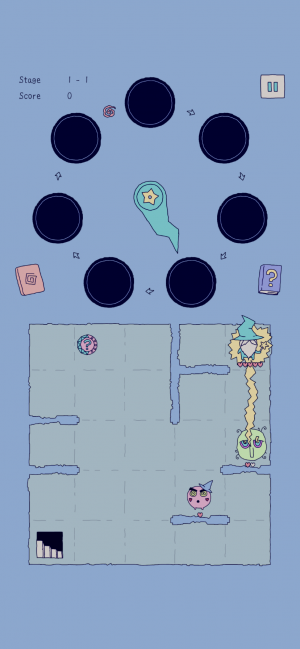
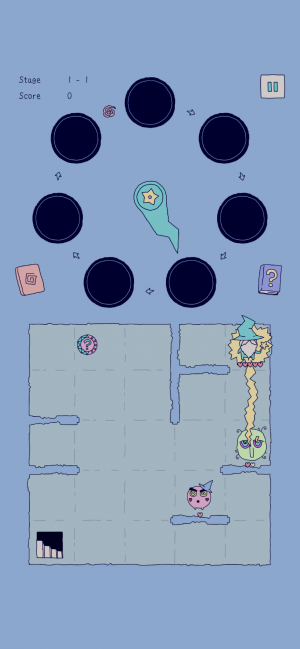
Loopy Wizard is yet another dungeon-crawler where you control a character by swiping to have them move around on a 5x5 grid. On this adventure, you are a wizard that can blast magic bolts at enemies from any distance, but you can also add special skills to an odd spellbook that forces you to cast them at set intervals according to a clock-like arrow that rotates around the spellbook's spell slots.
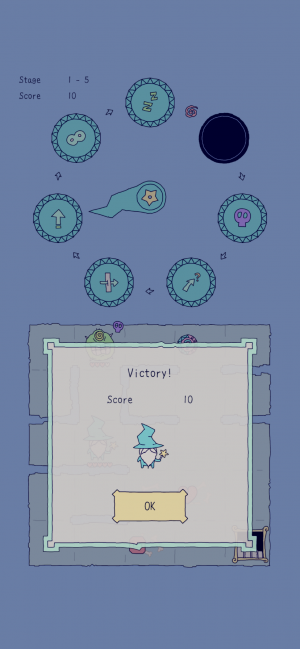
Your goal is to earn points by killing monsters and progressing as far through dungeons as possible before dying, which is much easier said than done given the game's quirky spell system. Although it might initially sound neat to pick up the ability to poison creatures, for example, you may run into situations where the only creature available to poison is yourself.
Intricate incantations
There are a few wrinkles to Loopy Wizard's structure and spellbook mechanics that make it a bit more nuanced and replayable than it might otherwise be. This includes things like level progression which reset many of your spells before moving on to the next set of challenging enemies and the ability to drag spells off of your spellbook to activate them off-schedule and remove them from your rotating inventory of powers.
This gives players some additional agency in terms of being able to form strategies for success as opposed to simply having to rely on the randomness of spell drops, while also creating a difficulty curve that prevents you from constantly depending on a particular loadout of abilities that seem to work well together.
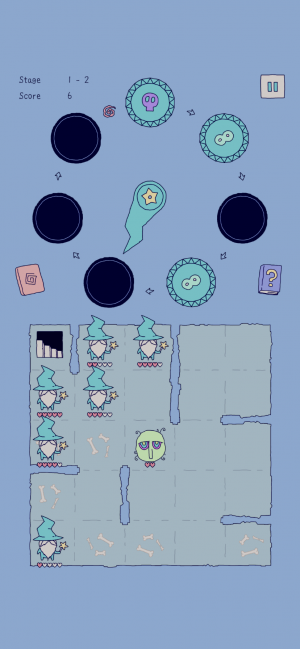
Arcane antics
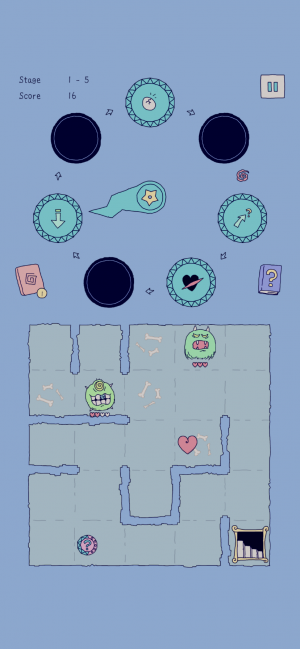
Much like Seven Scrolls, a lot of the appeal of Loopy Wizard is in seeing how effective and wild certain combinations of powers can get while learning to use them to your advantage. The only problem here is a lot of the powers are repeats from the previous game and the circular spellbook isn't as compelling a gameplay hook as the "if/then" logic statements of Seven Scrolls.
It also doesn't help that Loopy Wizard is yet another very obvious riff on Brough's games. Even if it was the most successful and innovative approach to this kind of game (which--to be clear--it is not), producing two titles back-to-back that so closely resemble another creator's work doesn't feel like homage so much as it does imitation, and it would've been nice to at least see some more departures from Brough's specific game formula, even if it was just at the surface level (i.e. visual style).
The bottom line
Loopy Wizard is a neat little Brough-like roguelike, but it's not particularly innovative, nor do its new twists prove to be more compelling than those of the titles it's imitating. They are just different, and barely so. Depending on who you are, you could pick up Loopy Wizard and have a grand time. It's more single-screen dungeon-crawling with crude art and a wacky ability gimmick, and either you are happy with minor variations on that familiar formula or you ask for more. I'm sure at this point in the review you know where I stand.
Source link:https://www.148apps.com/reviews/loopy-wizard-review/
credit : 148apps
Rocket Bot Royale review
May 25, 2022 by RSS Feed
Just like its name sounds like a hodgepodge of gaming terms, Rocket Bot Royale is a similar mashup of genres and mechanics where players parachute tanks into an arena and fight to be the last one standing. The result is a frantic little multiplayer game that is fun to play with casually but would be more fun if it wasn't so aggressively monetized and its matches lasted a tad longer.
Worms-meets-PUBG
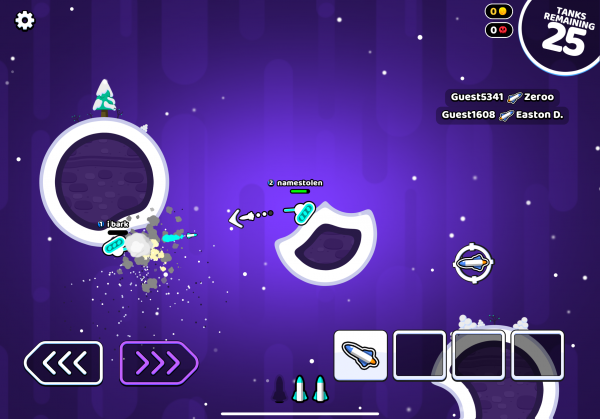
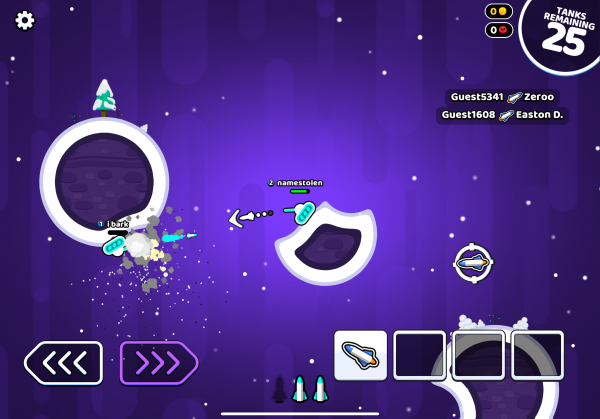
Rocket Bot Royale is a multiplayer battle royale game where every player controls a tank. At the start of each match, 25 live players parachute off of a helicopter onto a battlefield where they can then proceed to arc rocket shots to hit other players, kill bot tanks, and even blast their own tank to jump around to other parts of the map.
The goal of each match is simply to be the last tank alive. In addition to destroying other tanks to better your chances, you also have to constantly pay attention to the rising ooze that slowly overtakes the arena. Any tanks that aren't able to stay above this hazard get automatically eliminated.
Platform and pulverize
There's a lot to pay attention to in any given Rocket Bot Royale, but even some of the longest matches don't take more than a minute or two. In that time, you need to manage your positioning, destroy bots, look for crate drops, platform, and even destroy bits of the environment to give you better positioning against your enemies.
The tanks in Rocket Bot Royale aren't particularly sturdy, so you need to avoid enemy fire at all costs. Luckily, your tank is surprisingly good at rocket jumping and sticking to any surface, even when completely upside-down. These dynamics create potential for some really wild highlight moments of destroying tanks in mid-air or flipping out of the way of enemy salvos, but these feats will most likely happen by accident unless you invest a lot of time mastering the game.
Military industrial complex
There are a few minor quirks with Rocket Bot Royale, like its strange default controls that don't get completely fixed by turning on the slingshot aiming function, but all of these pale in comparison to the game's true problem: how it is monetized.
There are a lot of very familiar free-to-play mechanics present in Rocket Bot Royale, like a battle pass, premium skins, etc., but there are also systems in place that intentionally place players on unequal footing in matches. Prior to every round, players can spend coins on special weapons to bring with them, and your menu of choices increases the more you level up your account. If you don't engage with this system, you're almost always at a disadvantage when entering a match. The game drops crates that anyone can collect to gear up, but matches don't really last long enough for a looting phase to feel like something you can feasibly rely on.
The bottom line
There are a lot of ideas happening in Rocket Bot Royale, and most of them are pretty compelling and enjoyable. The only problem is many of these ideas are so thoroughly smothered by the game's monetization systems and blisteringly fast match length that none of them feel like they get room to breathe and realize their full potential.
Source link:https://www.148apps.com/reviews/rocket-bot-royale-review/
credit : 148apps

Follow Mid Atlantic Consulting


Subscribe Mid Atlantic Consulting







APP review today